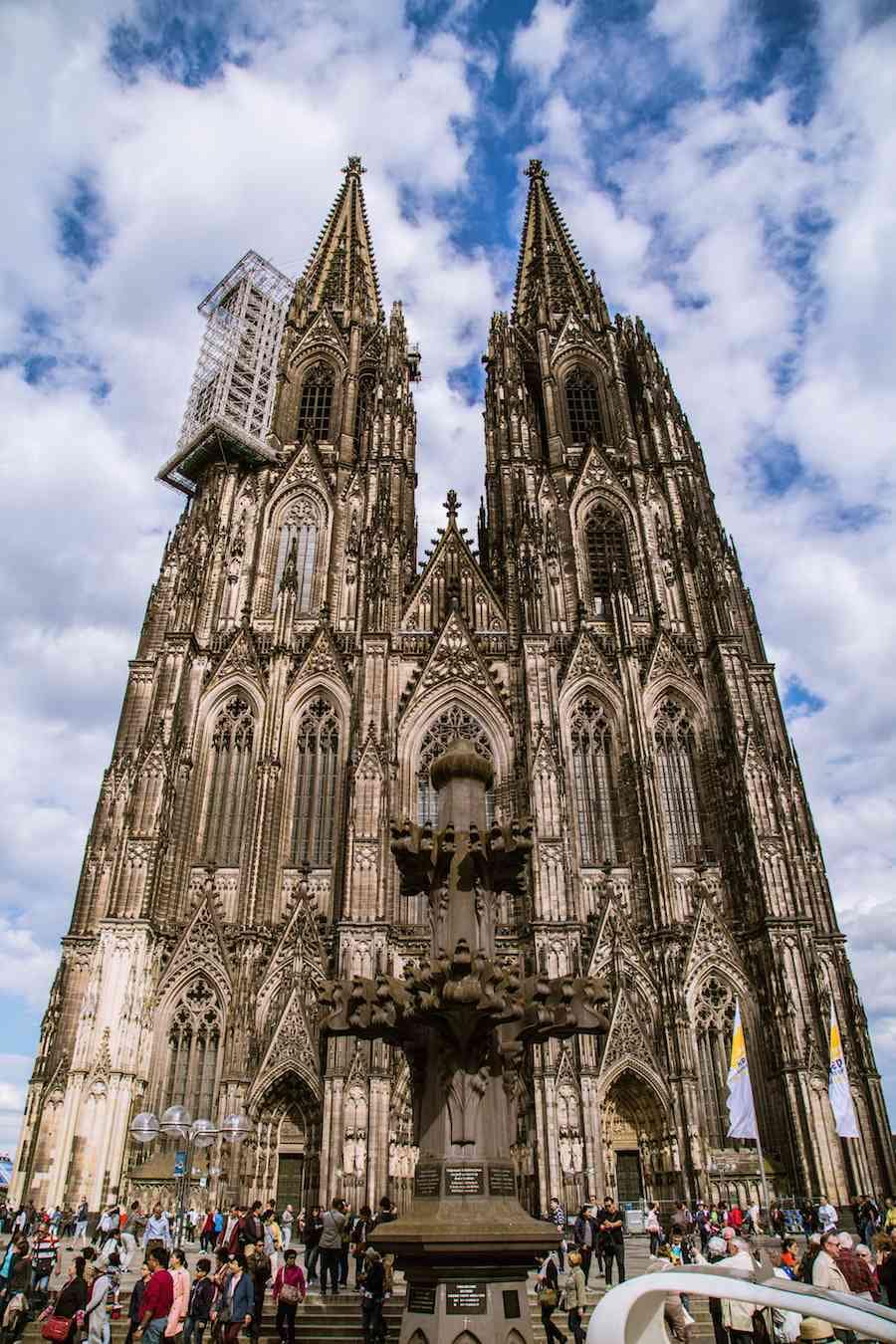
When most people think of Cologne (Köln in German), they think of the first thing a visitor sees in Cologne: the imposing edifice of the city’s famous Gothic cathedral.
In fact, it might be all they think about. Cologne doesn’t have the tourist draw of alternative, party-friendly Berlin or classy, traditionally Bavarian Munich. So is Cologne, Germany worth visiting?
Disclaimer: Lose the Map contains affiliate links and is a member of Amazon Services LLC Associates Program. If you make a purchase through an affiliate link, I receive a small commission at no extra cost to you.
I’d say so. Because it provides a fascinating glimpse into two very different sides of Germany. The traditional old buildings, palaces, and old towns on the one hand; to hear Germans talk about life there, that sense of tradition may annoyingly embed itself in a lot of slow-changing bureaucracy.
Then on the other hand, a country with a generally booming, modern, high-tech, and skilled service sector-oriented economy. Industrial and tech-focused cities like Frankfurt and Dusseldorf are filled with the headquarters and offices of major corporations. Germany has also attained a reputation for chemical production, electronics production (Siemens), and producing some of the best high-performance luxury cars on the market – BMW and Mercedes-Benz, of course.
Let’s see how – and why – these sides mingle and clash in Cologne.
- Hotels: Book incredible hotels in Cologne
-
I stayed at Qvest Hideaway – affordable and central – and loved it!
-
Tours: If you want to book a local walking tour – or any other tour – check out Viator in Cologne!
-
Flights: To get some great flight deals, look at Kiwi.com – but always double-check the site they link to!
Note: My visit exploring Cologne, Germany was provided courtesy of Rail Europe in collaboration with Qvest Hotel. However, all opinions and viewpoints expressed in this post are, as always, my own. This post does contain some affiliate links, for which I will earn a small commission (at no extra cost to you, of course).
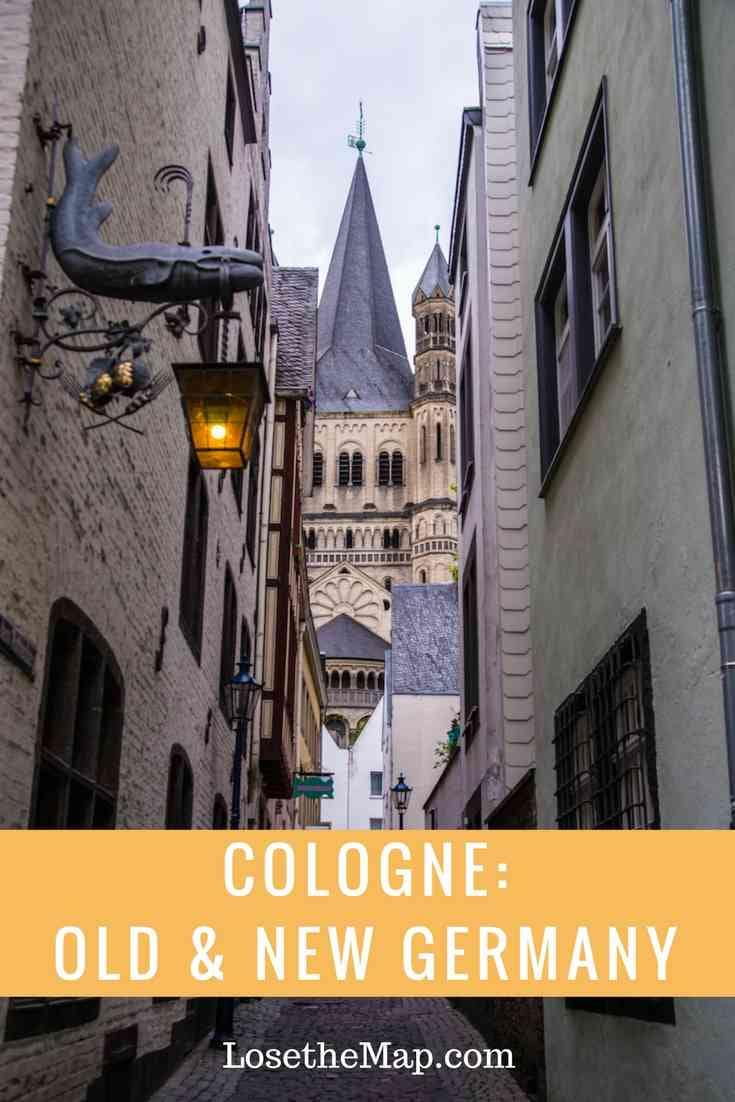
If you don’t have time to read this post, Pin away below for future reference!
First Impressions of Cologne
It’s hard not to notice this grand edifice no matter where you are in the city. The Köln Cathedral is the first thing you see when you exit the train station. You can get a glimpse of it from almost everywhere, it towers so much over the skyline.
The second thing I noticed on the way to my hotel is how oddly new everything else seemed. Block-like concrete buildings lined the streets, with a few nods here and there to a more storied past where the city blocks had survived World War II’s artillery shells. Overall, this section of Cologne seemed very modern; practical; one might stereotypically say, German.
Of course, there’s a tragic historical reason why this modern architecture has taken over the city. During World War II, the Allies bombed Cologne into near oblivion. Over 90% of the city center – and that’s a conservative estimate – was destroyed.
This was obviously a result of Germany doing a lot of horrible things to cause the war, like invading neighbors and committing genocide. But the citizens of Cologne, and the city itself, paid dearly, as did many others throughout Germany.
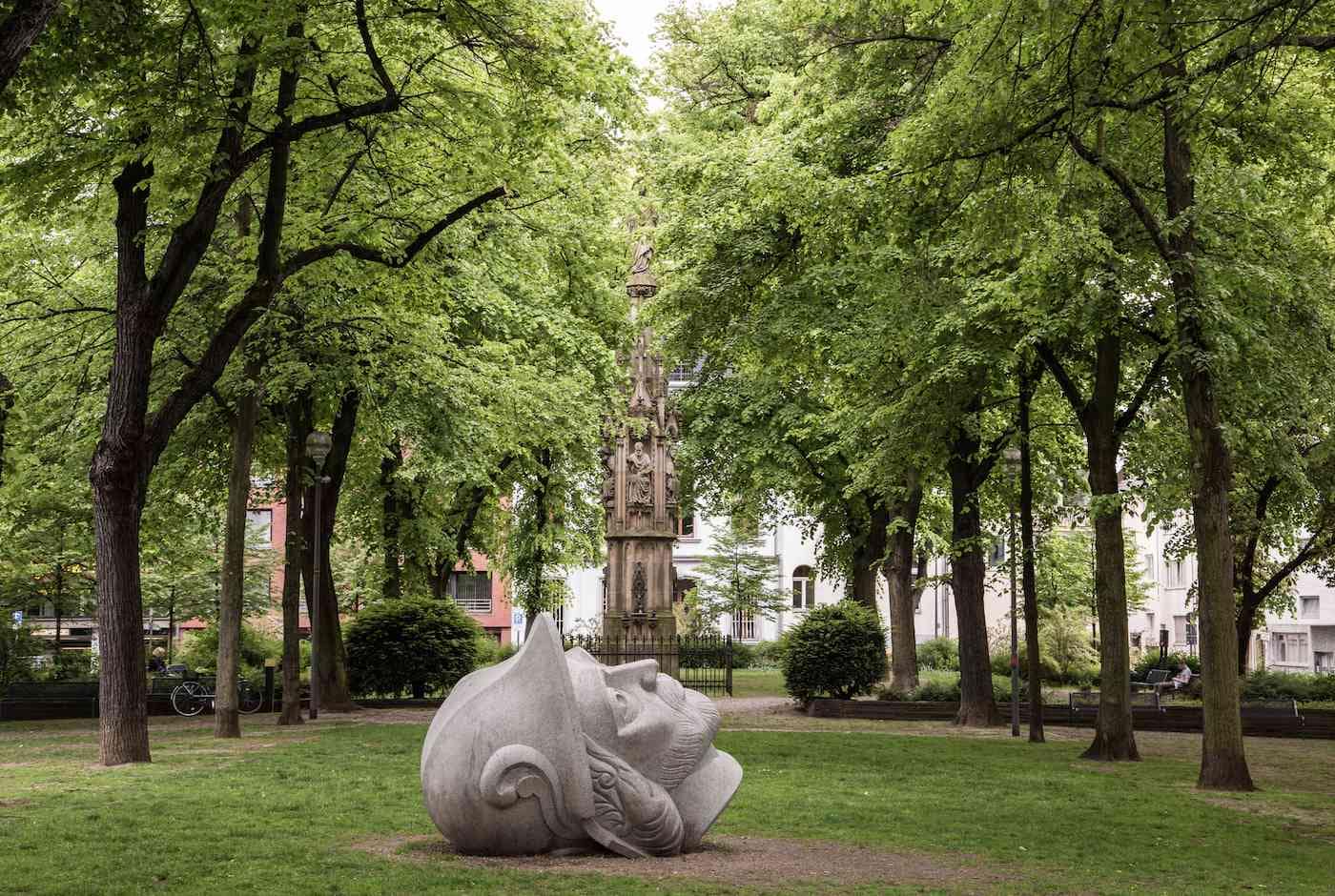
A cloudy sky and sparse drops of rain contributed to the gray atmosphere, and for a moment, I wondered what I would spend the day doing in this town.
The Old Town of Cologne
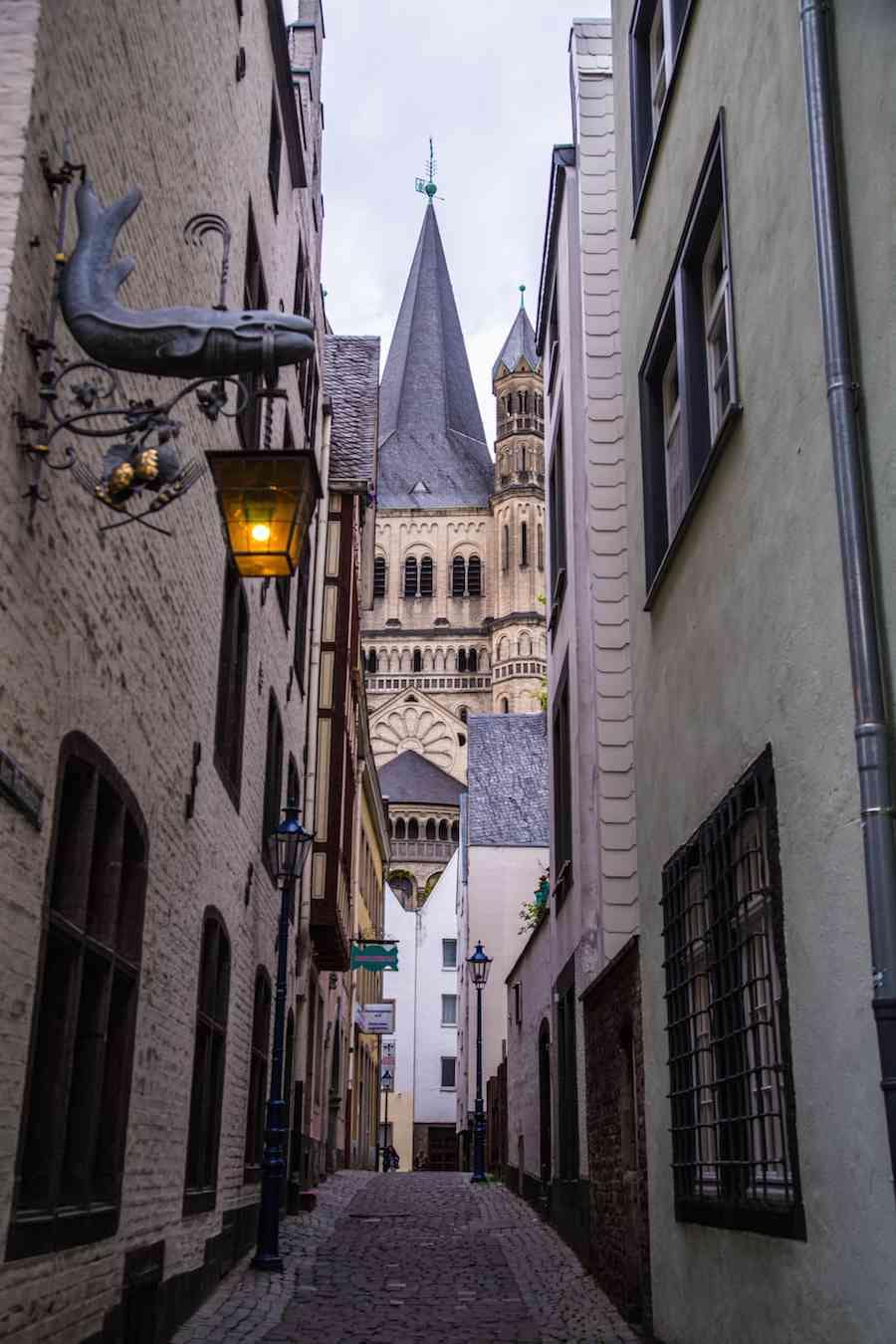
However, this is why it pays to go beyond first impressions; and in order to do that, you have to wander, get lost, and truly explore. I walked through the grid-like streets until I came upon the Old Town. With its alleys, medieval architecture, and welcoming pubs – it was there that I saw a completely different side to the city.
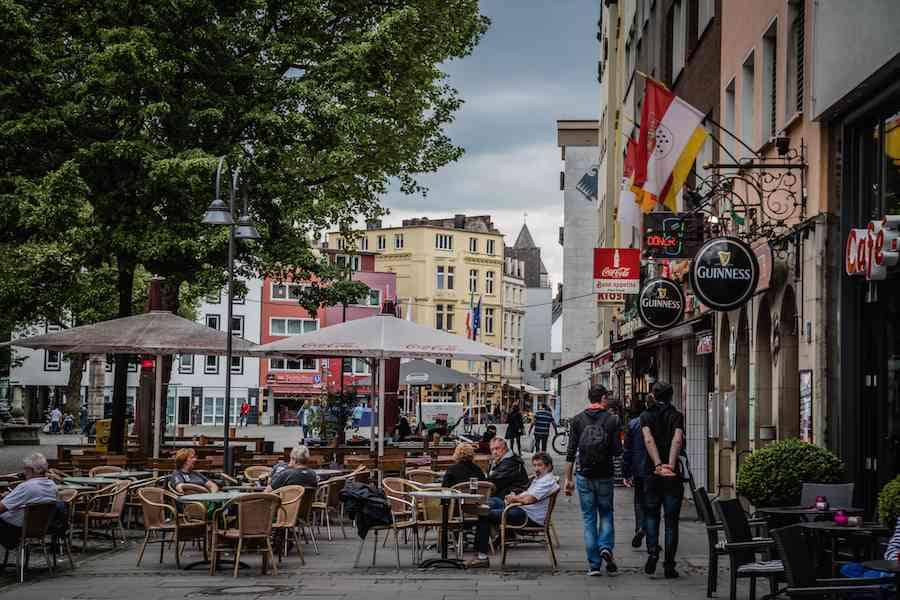
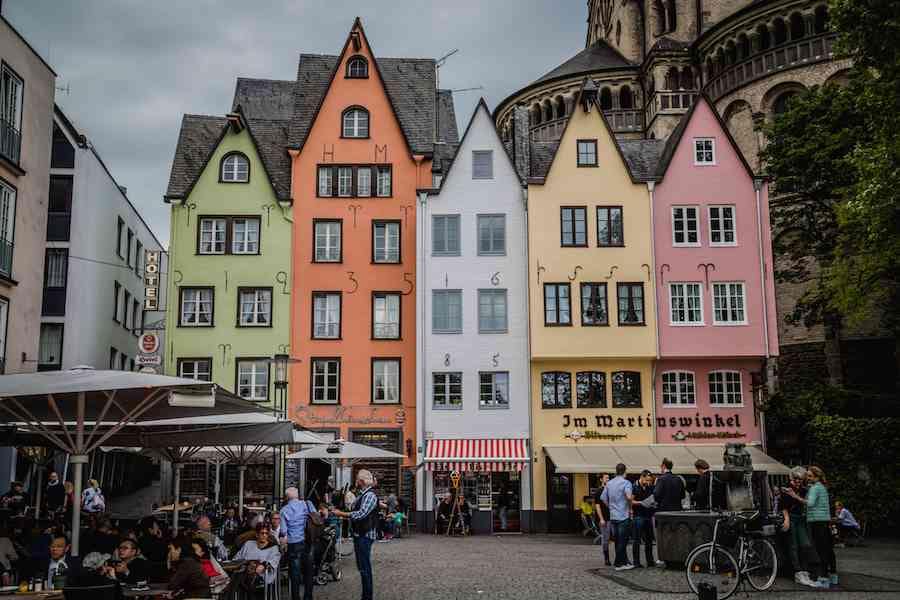
Alter Markt square and riverfront bars were packed with people on this cloudy yet decently warm day. Offering menus heavy on meat and beer (the locally brewed ale, named Kölsch, is wonderfully cheap at around 1.50 to 3 Euros), housed in classic Teutonic architecture with steeply slanted roofs for the harsh Northern European winters.
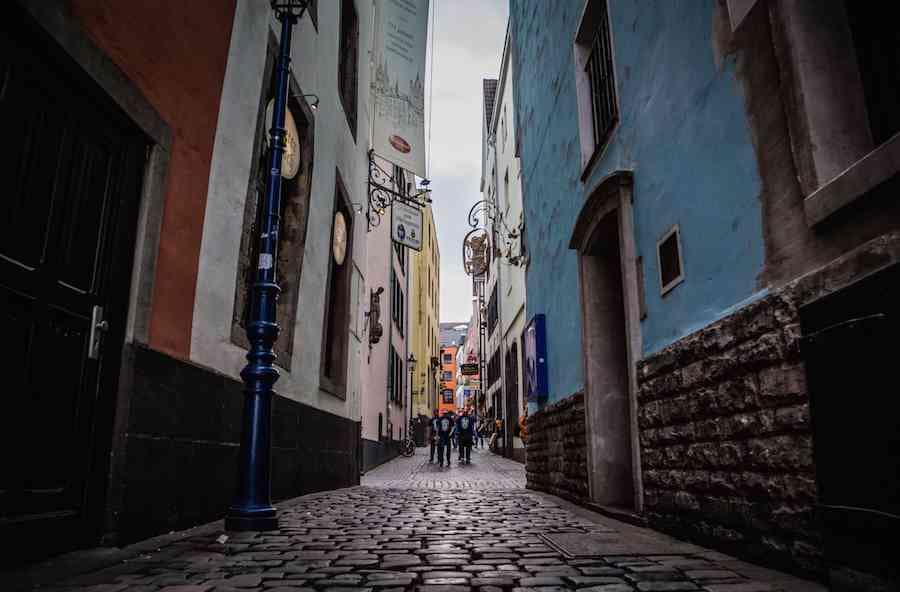
Seeing the colorful houses lining streets with traditional lamp posts and cobblestone pavements made me feel like I had entered a different town altogether. In this way, Cologne is a little microcosm of the constant identity struggle I see in Europe. Between the old and the traditional, versus the progressive, the modern, and the new. An identity struggle that never necessarily results in a winner – just in this strange little dichotomy.
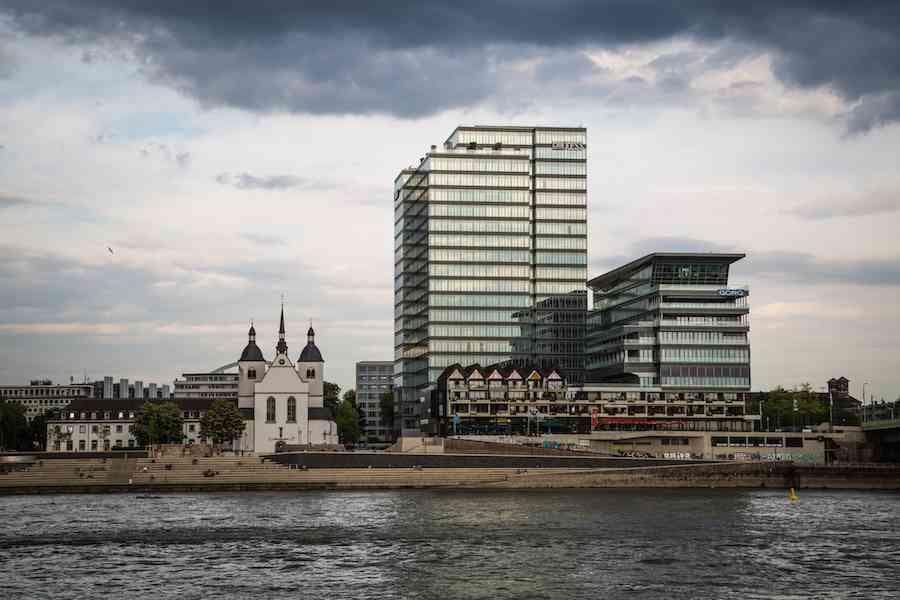
To start with, this former traditional bastion of conservative Catholicism is now one of the most gay-friendly cities in the world. Cologne’s summer Pride event is one of the biggest in Europe. The modern, block-like concrete buildings that now line the streets butt right up against the idyllic narrow alleys of the Old Town (painstakingly re-built after the war).
The old atmosphere yet progressive attitude of the city was even evident in my lodgings at Qvest. The building was a historic city archive converted into a modern boutique hotel. If you know me, you know I love finding boutique hotels with their own unique stories. It retains its neo-Gothic architecture while modern art and photographs hang on the walls.
Things To Do in Cologne
Cologne’s top-notch museums help visitors better understand the different aspects and historical eras of the city. The modern Museum Ludwig, with over 350 works of modern art, and the Roman-Germanic Museum, which follows Cologne’s history from Roman to Medieval Times, are two of the most popular.
While visiting Cologne, I was also personally fond of the Chocolate Museum, which goes into a three-thousand-year-old history of chocolate, for obvious reasons.
Before sunset, I boarded a river cruise (which I highly recommend to travelers) to see Cologne as many of the city’s oldest visitors had first seen it, coming upon it on the riverbank while sailing on the formidable Rhine.
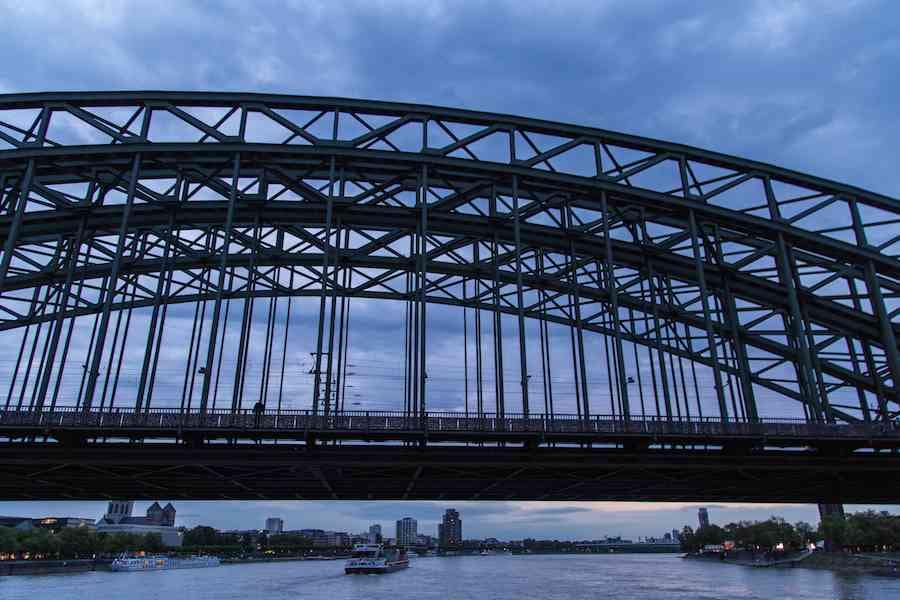
Sailing parallel to the city’s skyline, I noticed the ultra-modern crane buildings of the Rheinauhafen neighborhood. No, I don’t know how to pronounce that, but try moving your mouth as though you’re attempting to dislodge something from your throat). Here was another row of cool, modern, geometrical facades that look intriguing on their own, yet almost schizophrenic on the opposite bank from the weathered Gothic Köln Cathedral.
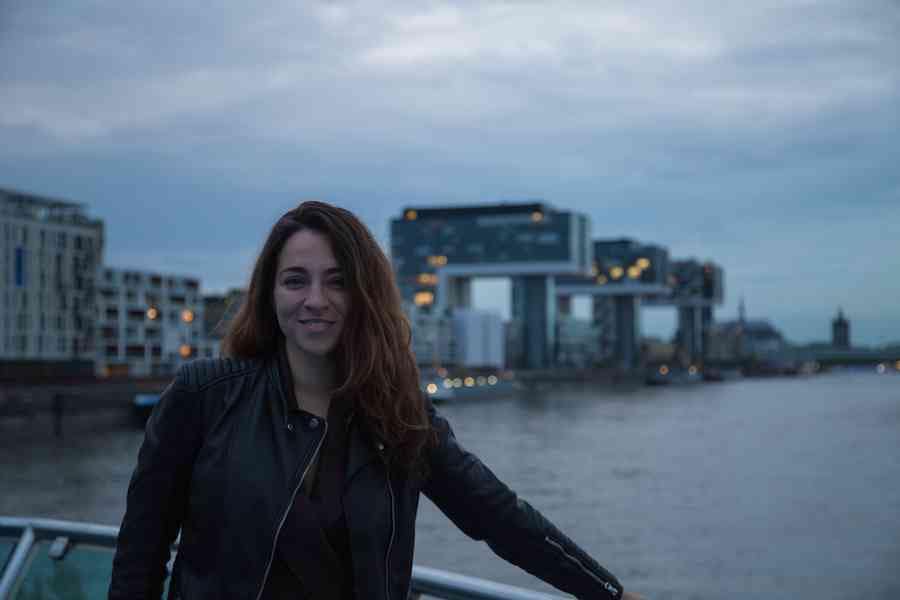
But cruising down the slow-moving yet powerful Rhine River, with the wind in my face and a hazy blue sunset on the horizon, I fell in love with the strange split nature of this lovely city. Cologne pays tribute to its roots while continuously looking forward; innovation and tradition don’t necessarily pull in opposite directions here, but instead co-exist side by side, though sometimes uneasily.
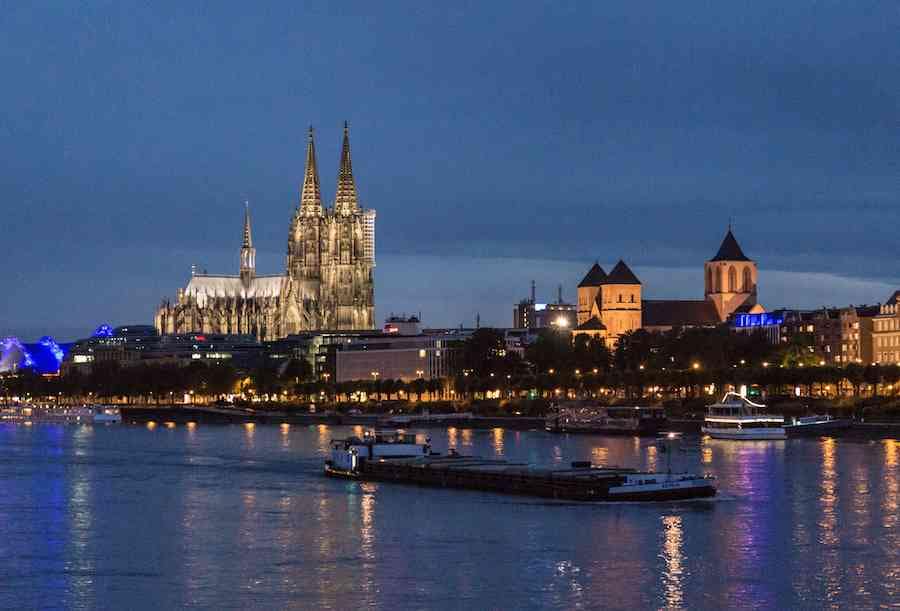
In some ways, isn’t this just like the evolving face of Germany?
So is Cologne, Germany Worth Visiting?
As I sat in one of the city’s best pubs that night, Gaffel am Dom, taking much too long to realize that the waiter would keep never stop bringing me Kölsch until I placed a “beer mat” over my glass, I realized how misunderstood modern Germany can be. Cologne has one of the warmest nightlife scenes in the country, and everywhere I went at night I saw smiles, boisterous conversations, and plenty of beer. A very far cry from the typical stereotype outsiders have of Germans. This impression of a people that are models of order and efficiency, almost robotic in their approach to life; a very unfair characterization, I thought.
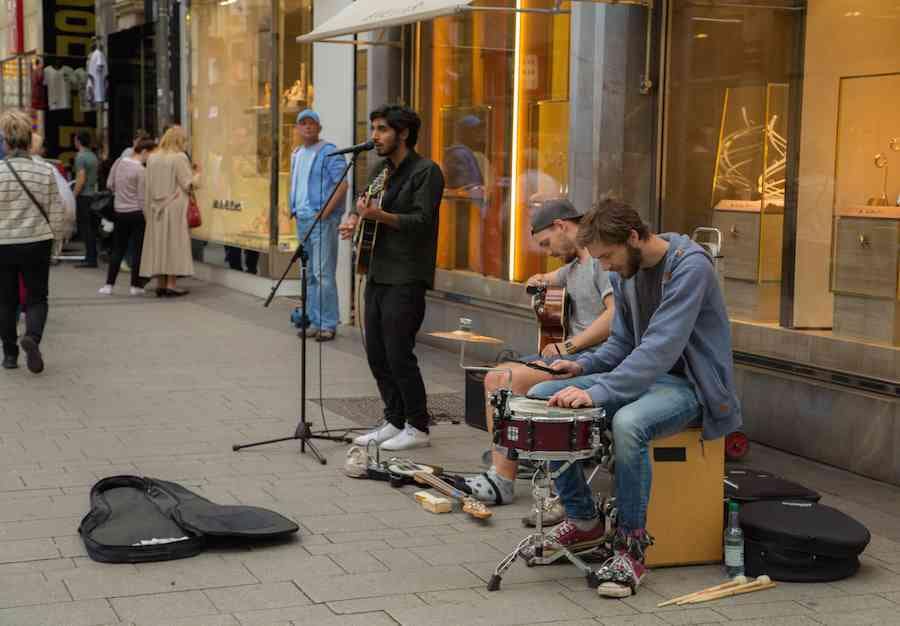
Part of the reason I love traveling and exploring is that I always gain a deeper understanding of a place and its culture. Better yet, I often have stereotypes I didn’t even realize I carried, shattered to pieces.
That’s why exploring Cologne, Germany, is necessary if you’re visiting Germany. Go to the Cathedral and the museums, cruise down the Rhine, but after you’re done with that, walk along the streets of the Old Town and plop into the first promising beer hall you see. Stop sightseeing and just sit, observe, drink, relax. You’ll get to see the old Germany, the new Germany, and better yet, get a real idea of German culture beyond the stereotypes.
Since I only had a limited time in the city, I can’t write too much more in-depth on the subject; however, I can’t wait to go back and see more.
What Can I Do in Cologne in One Day?
If you only have one day in Cologne, you can still hit some of the highlights. Check out the list below – and the map if you’re looking for a place to stay.
Koln Cathedral
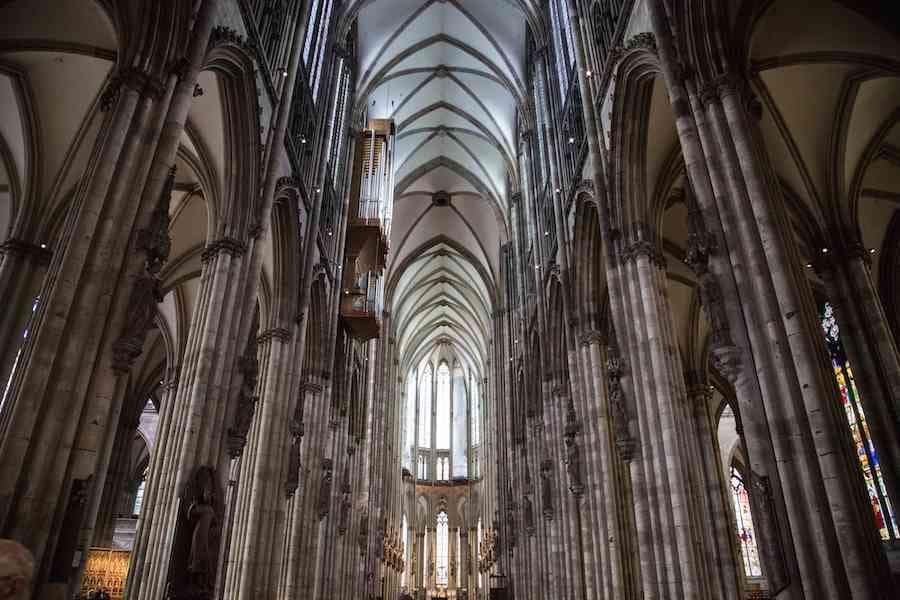
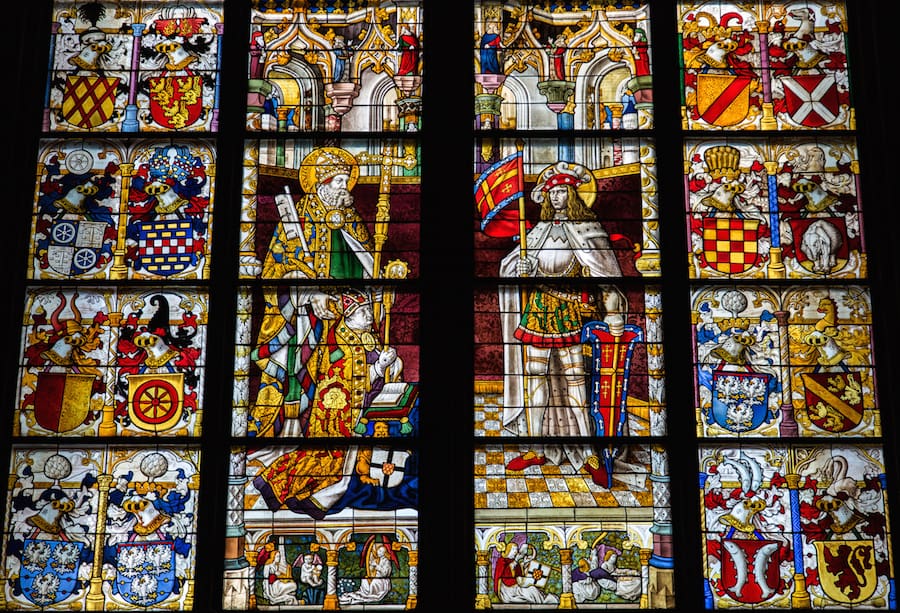
Head to the city’s number one landmark – a definite must-see. The entrance to the cathedral’s interior is free, but if you want to access the tower and the treasury, you’ll have to pay. Entrance to the tower is 8 Euros for adults, and a combined ticket for both is 12 Euros. Be warned, it is a CLIMB. Make sure you’re fit and in the mood. Though you do get a nice view of the Rhine and the surrounding city, the view from the cathedral’s tower is missing the city’s biggest landmark: the cathedral itself. For a better view, head to our next destination…
Entrance: 8 Euros (12 for treasury)
Time Spent: 1 hour
Hours: 9 AM-6 PM (4 PM winter)
KölnTriangle Observation Deck
Located across the river from the cathedral, this observation deck gives you a 360-degree view of the city. It shouldn’t take too much time to walk around and take pictures. Perhaps try to head here near sunset.
Entrance: 5 Euros
Time Spent: 30 minutes
Opening Hours: 11 AM-8PM (3 PM Wed)
Lunch at Alter Markt (Old Market)
Wander around the Old Market, take pretty pictures, and then sit down to have lunch and people watch. There are plenty of restaurants and beer halls to choose from. One I loved nearby, though not directly on the market, is Augustiner am Heumarkt. You can get traditional German food and local beer, warming up inside on a chilly day, and enjoying a (hopefully) sunny day in the summer outside.
Lunch Cost: 25 Euros
Time Spent: 2 hours
Restaurants’ hours differ
Visit the Chocolate Museum
This is a really cute attraction that almost every tourist can enjoy, whether you’re here solo, with friends, or with your whole extended family.
Museum Cost: 16.50-18 Euros
Time Spent: 1.5 hours
Hours: 10 AM – 6 PM
(Summer) Evening Cruise on the Rhine
End the day with a two-hour or so cruise down the Rhine River, to see Cologne all lit up at night. And to experience the city as so many people first saw it in the distant past; while sailing along the river. These sailings only take place during the warmer months.
Cruise Cost: 29 Euros
Time Spent: 2 hours
Start Time: 8 PM
(December) Christmas Markets in Cologne
If you happen to be in the area in the month of December, you definitely want to check out the city’s Christmas markets. As in most of Germany, Cologne does Christmas markets really well. The iconic Christmas market is in front of the Cologne Cathedral; however, there is also another charming market in Alter Markt known as Heinzels Winter Fairytale.
Brewery Tour
If there’s no Christmas markets or evening cruises available – or if they just aren’t your thing – can I suggest a brewery tour instead? After all, Cologne is famous for its beer. Why not have a local show you around and get at the heart of the city’s breweries; and more importantly, let you have a taste yourself?
Tour Cost: 25 Euros (beers included)
Time Spent: 2 hours
Saturdays, 5:30 PM (for THIS tour)
Total Estimated Cost for the Day (Without Hotel): 82 Euros
How much time should you spend in Cologne?
While I do think Cologne is worth a visit, I don’t think it requires the same amount of time other European cities do, at least in order to cover the highlights. Of course, you can slow travel and experience more anywhere if you’d like to stay longer; but I think two days is a perfect amount of time for exploring the city.
You can make Cologne a stop on a tour of nearby German cities like Düsseldorf or Essen. Düsseldorf is a cosmopolitan town with plenty to do, great for those who like shopping, culture, and nightlife, and Essen is an important city in Germany’s industrial history; the UNESCO Zollverein coal mine is located here.
Otherwise, you can head on west to the underrated city (in my opinion) of Brussels, Belgium, or on to Amsterdam.
Is there a city you enjoyed more the second time around? Comment below, then share and pin away! Subscribe to Losethemap.com for even more travel tips!
View Comments (2)
I like your blog, thanks for sharing. I love this information you shared with us. I am waiting for your next post. Keep it up.
ITS VERY HELP FUL AND VERY INFORMATIVE POST.THANK YOU.